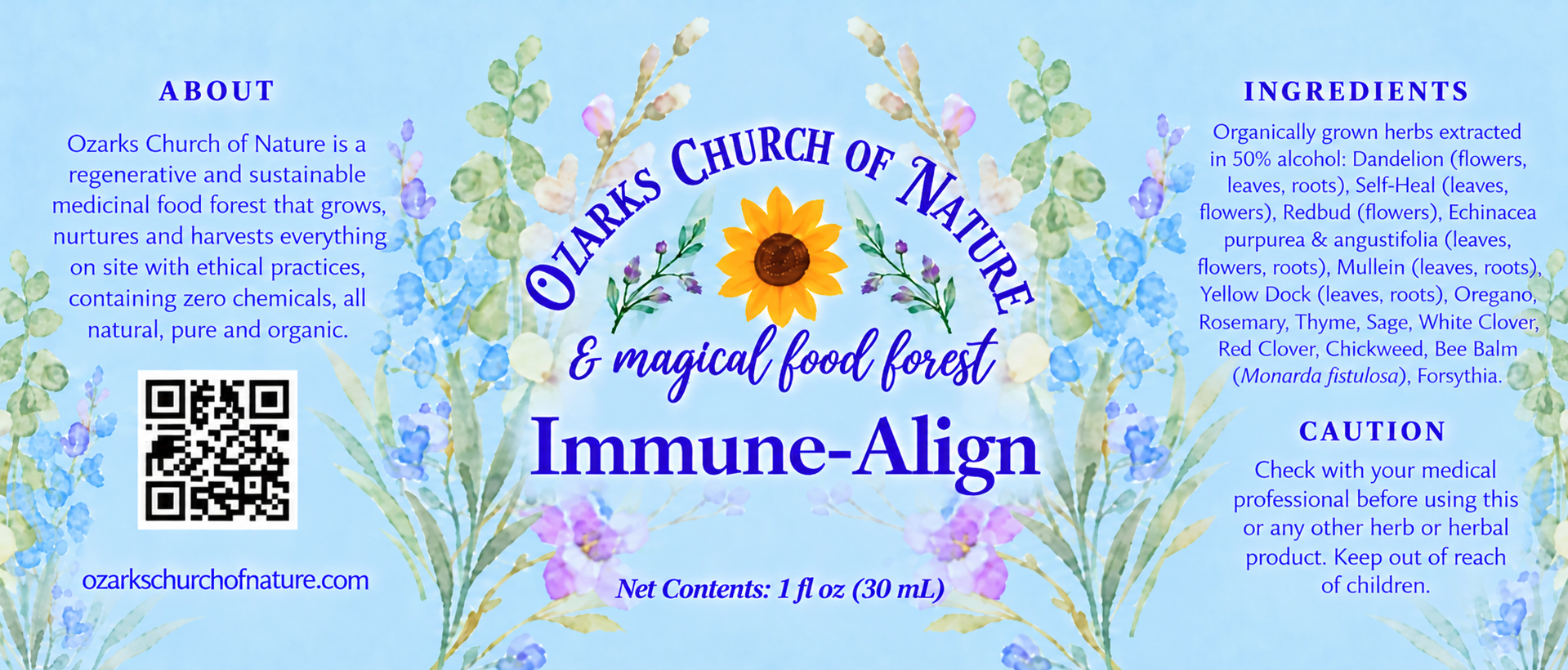
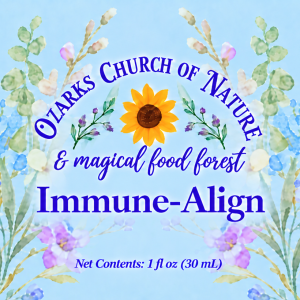
Immune Align – 15 Herb Botanical Tincture
A Botanical Gathering for Immune Wellness, Antioxidant Research & Seasonal Vitality
Handcrafted Herbal Tincture | 1 fl oz (30 mL)
15 traditional botanicals. One extraordinary gathering of plants. Rooted in the Ozarks.
Long before laboratories began investigating antioxidants, immune signaling, phytochemicals, and inflammatory pathways, people were gathering plants from gardens, fields, forests, and meadows.
Those plants weren’t simply decorations. They were food, fragrance, tradition, knowledge, and an important part of everyday life.
Immune Align was born from that same appreciation for the natural world.
This handcrafted botanical tincture brings together fifteen herbs, flowers, leaves, and roots selected from the rich traditions of herbalism and the remarkable botanical diversity around us.
From echinacea and self-heal to dandelion, clover, rosemary, oregano, thyme, and bee balm, these plants have fascinating histories and are the subjects of growing scientific interest.
Why are people so interested in them? Let’s explore!
Immune Function & Seasonal Wellness
Our immune system is an extraordinary network of cells, tissues, and chemical messengers. It works constantly, helping the body recognize challenges, maintain balance, and respond to its environment.
Echinacea is one of North America’s best-known traditional herbs associated with seasonal wellness and immune function.
Both Echinacea purpurea and Echinacea angustifolia have attracted considerable scientific attention. Researchers have investigated their naturally occurring compounds, including alkamides, polysaccharides, and phenolic constituents, as well as their relationships with immune signaling.
Some clinical studies of echinacea preparations have suggested a modest influence on the likelihood of developing common colds, although findings vary considerably by species, preparation, and study.
Self-Heal (Prunella vulgaris) is another fascinating plant. This unassuming member of the mint family has a remarkable history in traditional herbalism. Modern research has explored its polysaccharides, rosmarinic acid, and other compounds in relation to immune activity, oxidative stress, and inflammatory signaling.
Bee Balm (Monarda fistulosa) adds another dimension to the botanical story. A North American mint relative with a wonderfully aromatic character, bee balm has a long history of traditional use and contains compounds of interest to phytochemical researchers.
Together, these plants illustrate why immune-related botanical research remains such an active and interesting field.
Antioxidants, Free Radicals & Cellular Wellness
You’ve probably heard the word antioxidant countless times. But what does it actually mean?
As part of normal metabolism, our bodies produce reactive molecules, including free radicals. Environmental exposures can contribute additional oxidative stress.
Our bodies have their own elaborate antioxidant defense systems to help maintain balance.
Plants also produce a remarkable variety of antioxidant compounds, including flavonoids, phenolic acids, and other phytochemicals.
Among the aromatic herbs in Immune Align:
- Rosemary contains compounds such as rosmarinic acid and carnosic acid, widely investigated for antioxidant activity.
- Oregano contains naturally occurring phenolic compounds, including carvacrol and rosmarinic acid.
- Thyme contains thymol and other aromatic constituents that have attracted scientific interest.
- Sage contains a variety of plant polyphenols studied for their chemical and antioxidant properties.
These fragrant herbs are more than culinary favorites. They are remarkably complex plants with sophisticated natural chemistry!
Researchers continue exploring how their constituents behave in laboratory systems and how some might be useful in nutrition, food preservation, and other applications.
Inflammation: Understanding the Body’s Natural Responses
Inflammation isn’t automatically a bad thing. It’s part of the body’s normal response to injury, irritation, and biological challenges. The important issue is how those responses are regulated.
Scientists are investigating numerous plant compounds for their interactions with inflammatory signaling pathways.
Self-heal, dandelion, echinacea, rosemary, oregano, and thyme have all appeared in research exploring these mechanisms.
For instance, experimental studies involving Prunella vulgaris have examined inflammatory markers and cellular responses. Dandelion extracts have also been investigated for a range of biological activities.
These findings help explain the scientific interest surrounding traditional herbs.
It’s worth remembering that an effect observed in a laboratory does not necessarily produce the same result when a person consumes an herbal preparation…and all herbal preparations are not the same, not grown the same, not harvested and stored the same…
Gut Health, Cardiovascular Research & Neuroprotection
The scientific study of plants reaches into some fascinating areas. Researchers are interested in how botanical compounds interact with digestive microorganisms, how plant polyphenols behave in cardiovascular research models, and whether certain compounds demonstrate neuroprotective mechanisms in experimental settings.
For example, rosemary’s carnosic acid and related compounds have been investigated in laboratory studies of oxidative stress and neurological pathways.
Other botanical researchers are exploring interactions between plant extracts, cellular signaling, and cardiovascular or digestive processes.
These are exciting fields of investigation, although they are not proof that Immune Align prevents neurological or cardiovascular disease or changes the gut microbiome.
What they demonstrate is just how much remains to be discovered about the plants around us.
Meet the 15 Botanicals of Immune Align
Dandelion – Taraxacum officinale
Far more than a familiar lawn flower! Dandelion has a long history in traditional herbalism for digestive complaints, fluid balance, and liver-related preparations. Its leaves have traditionally been used as a diuretic, while its roots are associated with digestive bitters. Researchers have investigated dandelion’s antioxidant, anti-inflammatory, and metabolic properties, including activity in experimental liver and cellular models.
Self-Heal – Prunella vulgaris
Sometimes called Heal-All, this humble little mint-family plant has centuries of traditional use for sore throats, minor wounds, and inflammatory conditions. Rich in fascinating constituents such as rosmarinic acid and polysaccharides, self-heal has attracted scientific attention for antioxidant, anti-inflammatory, antiviral, and immunomodulatory activity. Certain extracts have also demonstrated antiproliferative effects in experimental cancer-cell studies.
Eastern Redbud – Cercis canadensis
One of the Ozarks’ beautiful heralds of spring, redbud offers edible blossoms and a fascinating history of traditional plant use. Historical preparations involving redbud bark have been associated with respiratory complaints and digestive disturbances. Scientists have also investigated antioxidant compounds and other phytochemicals in Cercis species, although clinical evidence for eastern redbud remains limited.
Echinacea – Echinacea purpurea and Echinacea angustifolia
One of the most recognizable herbs associated with immune health and seasonal wellness. Traditionally used in North American herbal practices, echinacea has been widely investigated for its effects on immune signaling and respiratory infections. Some human research suggests certain preparations may slightly reduce the likelihood of catching a cold, although findings vary and benefits remain uncertain.
Common Mullein – Verbascum thapsus
Recognizable by its velvety leaves and towering flower stalks, mullein has a long history as a traditional respiratory herb. Its leaves and flowers have been used in preparations for coughs, irritated throats, and bronchial discomfort. Researchers have investigated mullein’s antioxidant, anti-inflammatory, antimicrobial, and antiviral activity, primarily in experimental studies.
Yellow Dock – Rumex crispus
Known for its distinctive leaves and deep-growing roots, yellow dock has traditionally been used as a bitter digestive herb and, in some preparations, a mild laxative. Its roots contain anthraquinone-related compounds and other phytochemicals. Laboratory researchers have explored antioxidant, antimicrobial, and anti-inflammatory properties of different Rumex extracts.
Oregano – Origanum vulgare
Much more than a pizza herb! Oregano has a rich history in culinary and traditional herbal preparations, including those associated with digestive and respiratory complaints. Its aromatic compounds, particularly carvacrol and thymol, have demonstrated antimicrobial and antifungal activity in laboratory studies. Oregano extracts have also attracted attention for antioxidant, anti-inflammatory, and food-preservation research.
Rosemary – Salvia rosmarinus (formerly Rosmarinus officinalis)
Traditionally associated with remembrance, digestion, and mental clarity, rosemary is one of the most fascinating herbs in the aromatic garden. Its compounds, including carnosic acid and rosmarinic acid, have been investigated for antioxidant, anti-inflammatory, and experimental neuroprotective properties. Researchers continue exploring rosemary constituents in relation to cellular signaling and oxidative stress.
Thyme – Thymus vulgaris
Small leaves, remarkable chemistry! Thyme has traditionally been used in herbal preparations for coughs, respiratory irritation, and digestive discomfort. Its aromatic constituents, including thymol, have been investigated for antimicrobial, antifungal, antioxidant, and anti-inflammatory activity. Certain thyme preparations also have a history as traditional expectorants.
Garden Sage – Salvia officinalis
A fragrant Mediterranean herb traditionally associated with digestive comfort, sore throats, perspiration, and memory. Sage contains polyphenols and aromatic constituents studied for antioxidant activity. Small human studies have investigated its possible effects on memory, cognition, and menopausal hot flashes, although further research is needed.
White Clover – Trifolium repens
A familiar meadow plant and a wonderful companion to pollinators, white clover has a history of traditional use in teas and botanical preparations. Its flowers and leaves contain flavonoids and other phenolic compounds. Researchers have investigated extracts for antioxidant, anti-inflammatory, and antiproliferative activity in laboratory settings, although human medicinal research remains limited.
Red Clover – Trifolium pratense
Traditionally gathered for its beautiful blossoms and widely associated with women’s herbal traditions. Red clover contains isoflavones, including formononetin and biochanin A, which have attracted research interest for their estrogen-like activity. Human studies have explored red clover extracts for menopausal symptoms, while laboratory research has examined antioxidant, anti-inflammatory, and other cellular effects. Clinical results remain mixed.
Common Chickweed – Stellaria media
This tender spring green has a long history in traditional food and herbal preparations, particularly those associated with irritated skin and minor inflammatory complaints. Chickweed contains flavonoids, saponins, and other plant compounds. Experimental research has investigated its antioxidant, anti-inflammatory, and antimicrobial properties, although human clinical evidence is limited.
Wild Bergamot / Bee Balm – Monarda fistulosa
A wonderfully fragrant North American native and a favorite of bees, butterflies, and herbalists! Bee balm has a history of traditional use in aromatic teas and preparations associated with digestive discomfort and seasonal respiratory complaints. Its essential oil can contain thymol, carvacrol, and other aromatic constituents, depending on the plant’s chemical type. These compounds have attracted antimicrobial and antioxidant research interest.
Forsythia – Forsythia suspensa
One of the earliest golden messengers of spring, this beautiful trailing shrub offers more than its brilliant yellow blossoms! We harvest both its flowers and distinctive dry seed capsules, which are botanically classified as fruits.
The dried fruits of Forsythia suspensa, known as Lian Qiao, have a long history in traditional East Asian herbalism. Researchers have investigated compounds such as forsythoside A and phillyrin for antioxidant, anti-inflammatory, antimicrobial, and antiviral activity.
One particularly fascinating veterinary study investigated forsythoside A in chickens with experimentally induced infectious bronchitis, demonstrating why scientists remain interested in the chemistry of this remarkable plant.
The research involving isolated compounds and traditional fruit preparations does not necessarily apply to preparations containing both flowers and fruits.
A Different Approach to Herbal Craftsmanship
At Ozarks Church of Nature & Magical Food Forest, our connection with herbs begins long before they reach a bottle. It begins with planting, observing, ethical harvesting, researching, and appreciating the remarkable diversity of the natural world.
Immune Align is prepared in small batches using a traditional alcohol extraction process, bringing together carefully selected botanicals in one handcrafted preparation.
We believe that learning about herbs should be fascinating, approachable, and accessible. You don’t have to be a botanist or a scientist to appreciate the extraordinary chemistry of the plants growing around us! And you certainly don’t have to stop being curious.
Ingredients & Preparation
Botanicals: Dandelion (Taraxacum officinale), Self-Heal (Prunella vulgaris), Eastern Redbud (Cercis canadensis), Echinacea (Echinacea purpurea and Echinacea angustifolia), Common Mullein (Verbascum thapsus), Yellow Dock (Rumex crispus), Oregano (Origanum vulgare), Rosemary (Salvia rosmarinus, formerly Rosmarinus officinalis), Thyme (Thymus vulgaris), Garden Sage (Salvia officinalis), White Clover (Trifolium repens), Red Clover (Trifolium pratense), Common Chickweed (Stellaria media), Wild Bergamot / Bee Balm (Monarda fistulosa), and Forsythia (Forsythia suspensa)
Extraction: Traditionally prepared using a 100-proof alcohol base (50% alcohol before extraction).
Net contents: 1 fl oz (30 mL).
Small-batch botanical craftsmanship from Ozarks Church of Nature & Magical Food Forest.
Curious About the Science? Explore the Research!
We believe people should have the opportunity to explore scientific literature for themselves.
The following publications are examples of research into individual plants, traditional botanical chemistry, antioxidants, and related biological processes.
Echinacea and Immune Research
- Echinacea for the Prevention and Treatment of Upper Respiratory Tract Infections: A Systematic Review and Meta-Analysis
- Echinacea Plants as Antioxidant and Antibacterial Agents: From Traditional Medicine to Biotechnological Applications
Self-Heal (Prunella vulgaris)
- Prunella vulgaris Active Components and Their Hypoglycemic and Antinociceptive Effects in Diabetic Mice
- Prunella vulgaris Extract and Vascular Inflammation in an Experimental Cell Model
Dandelion and Botanical Antioxidants
Rosemary, Oregano, Thyme and Aromatic Compounds
- Identification and Quantification of a Major Antioxidant and Anti-inflammatory Phenolic Compound in Culinary Herbs
- Thymol, Thyme, and Other Plant Sources: Health and Potential Uses
Mullein and Traditional Botanical Research
- Common Mullein: Recent Advances in Research
- Health-Promoting and Disease-Mitigating Potential of Common Mullein: A Review
Red Clover and Plant Chemistry
These references examine individual plants, extracts, compounds, or experimental preparations. They are provided for botanical education and do not establish the safety or clinical effects of the finished Immune Align tincture.
A world of botanical knowledge is growing all around us. Sometimes the most interesting plants are the very ones we’ve been walking past for years.
Ozarks Church of Nature & Magical Food Forest
Where nature, traditional knowledge, curiosity, and community come together.

Reviews
There are no reviews yet.