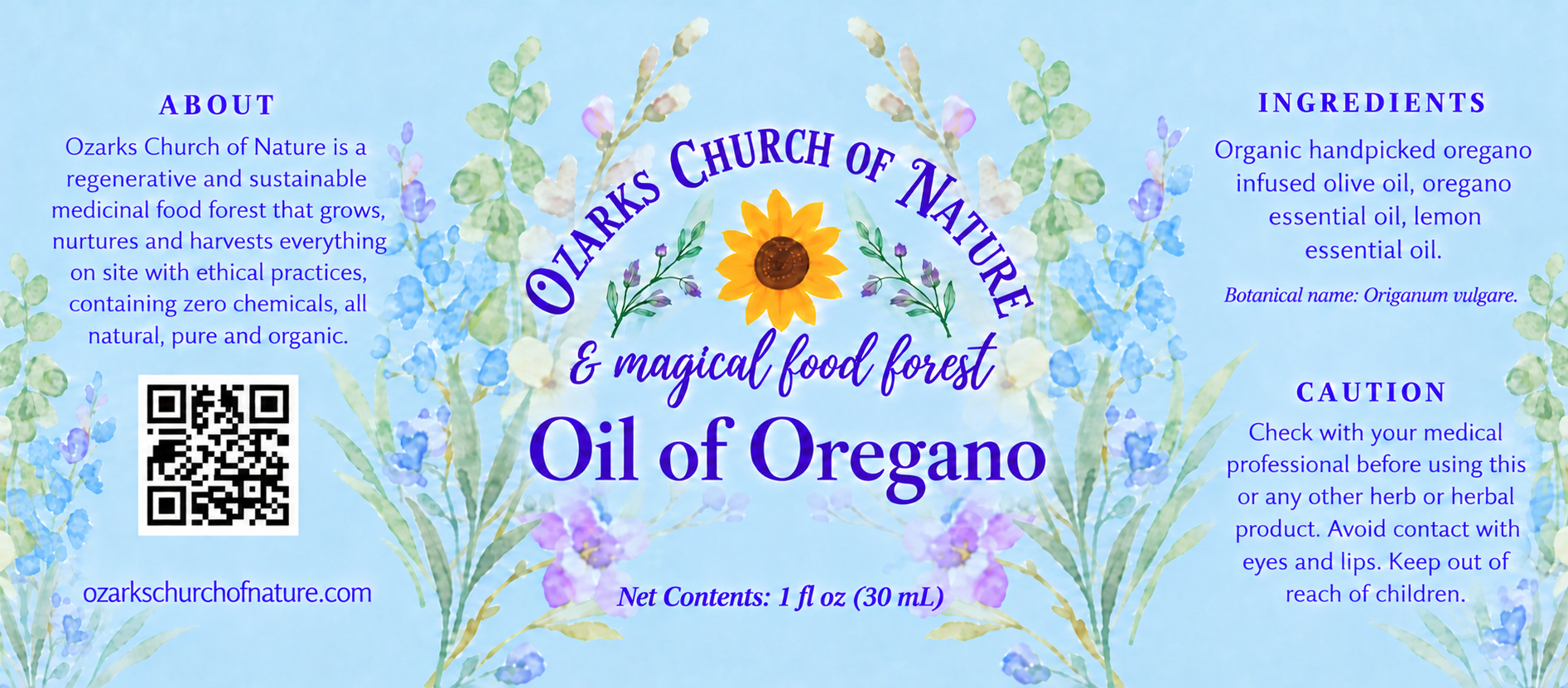
Oil of Oregano
Ancient Botanical Traditions, Powerful Plant Chemistry & Fascinating Modern Research
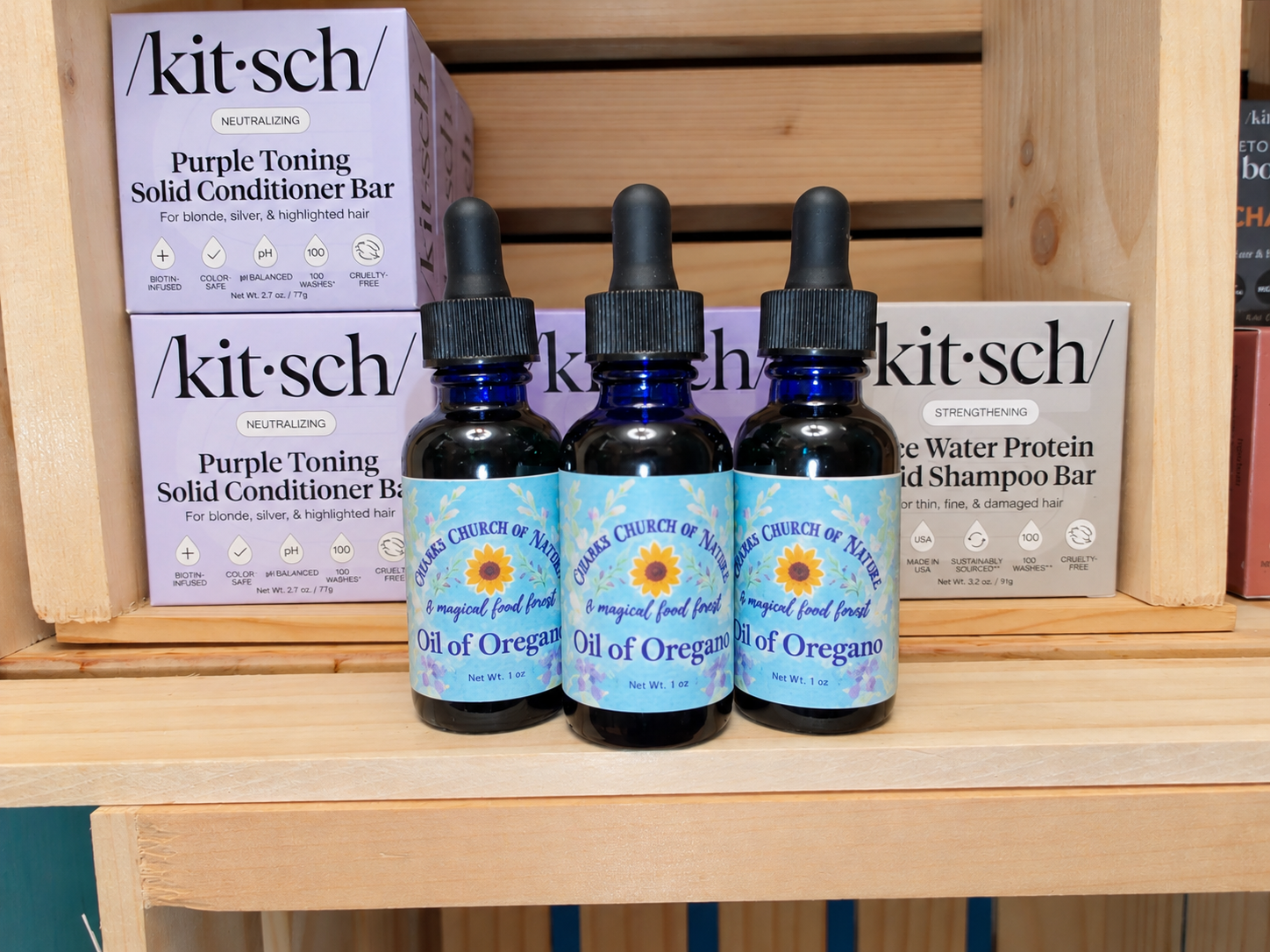
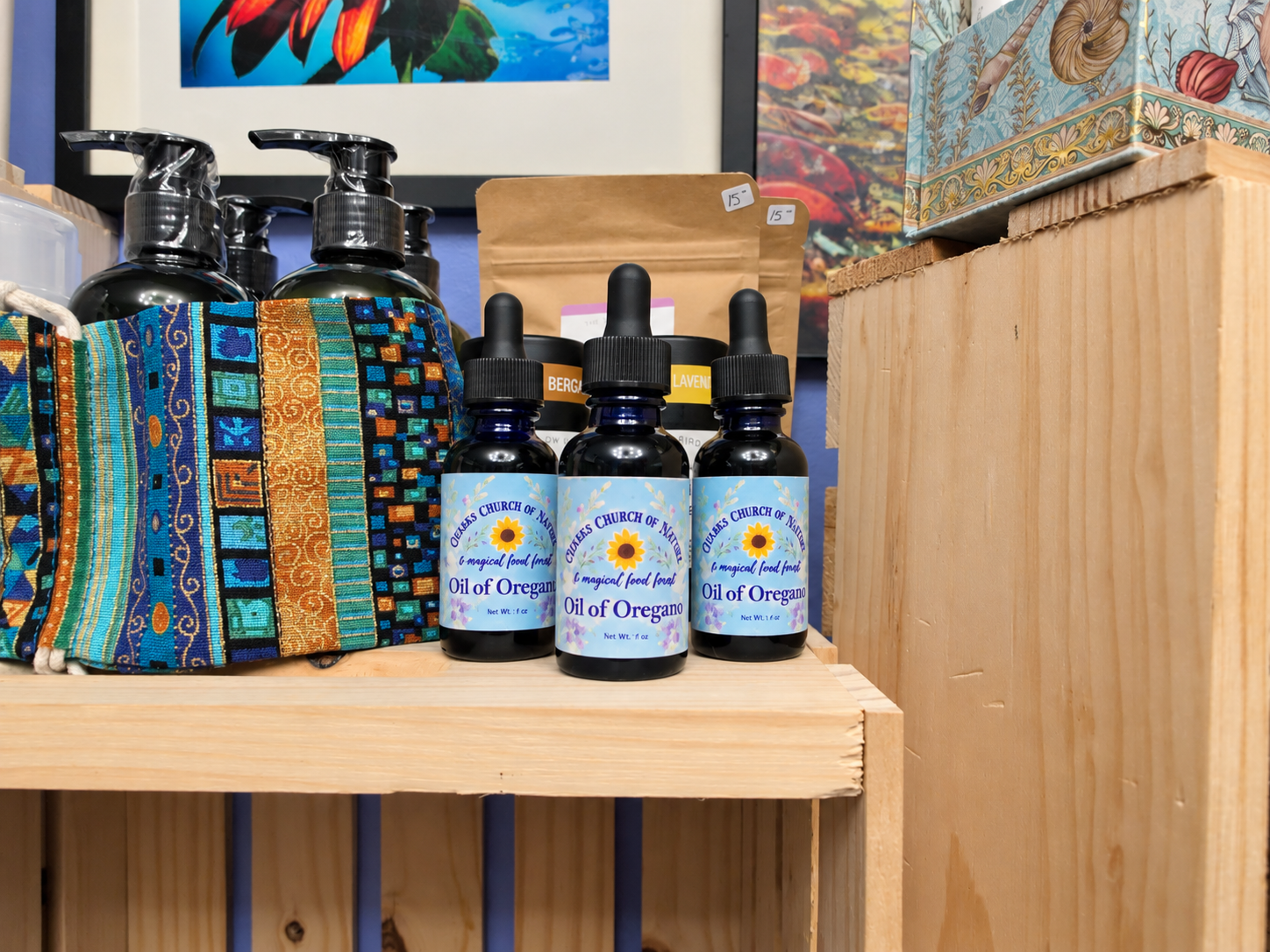
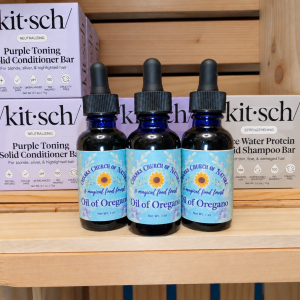
Handcrafted Oregano-Infused Olive Oil | 1 fl oz (30 mL)
One familiar kitchen herb. An extraordinary world of botanical chemistry.
Most people recognize oregano as the fragrant herb that makes Mediterranean cooking so memorable. But behind those little green leaves lies a remarkable collection of aromatic compounds that have fascinated herbalists, botanists, food scientists, microbiologists, and researchers for generations.
At Ozarks Church of Nature & Magical Food Forest, oregano has a special place in our herbal collection. Our small-batch Oil of Oregano begins with handpicked oregano slowly infused into olive oil. The finished blend also contains oregano essential oil and lemon essential oil, creating a wonderfully distinctive aromatic preparation.
We love knowing where our herbs come from, how they’re prepared, and what makes their natural chemistry so interesting. And oregano certainly gives us plenty to explore!
Oregano: More Than a Culinary Herb
Oregano, particularly Origanum vulgare, belongs to the mint family, Lamiaceae. Like rosemary, thyme, sage, basil, and many other familiar culinary herbs, oregano produces aromatic compounds that contribute to its distinctive scent and character.
Oregano has a long history in Mediterranean food traditions and European herbal practices. One reason it continues to attract scientific interest is the diversity of compounds found in its leaves and essential oil.
These include:
Carvacrol – A phenolic monoterpene widely investigated for antimicrobial activity and interactions with microbial membranes.
Thymol – A related aromatic compound found in oregano, thyme, and other plants, studied for its biological and chemical properties.
Rosmarinic acid – A naturally occurring phenolic compound found in many mint-family plants and researched for antioxidant activity.
Other flavonoids and phenolic compounds – Plant constituents that contribute to oregano’s complex phytochemical profile.
The amounts of these compounds can differ dramatically depending on the oregano species, growing conditions, harvest, and preparation method.
That distinction is especially interesting to herbalists: a culinary infusion, an aqueous extract, an ethanol extract, and a distilled essential oil are not chemically identical preparations.
Antimicrobial Research: What Scientists Have Investigated
One of the most extensively studied aspects of oregano essential oil is its activity against certain microorganisms under laboratory conditions. Researchers have investigated oregano oil and carvacrol against numerous bacterial and fungal species.
In a 2018 study, scientists examined oregano oil against multidrug-resistant bacterial isolates, including methicillin-resistant Staphylococcus aureus (MRSA), Pseudomonas aeruginosa, and Acinetobacter baumannii.
The researchers reported bactericidal activity in laboratory experiments and reductions in bacterial burden when oregano oil was applied topically in an experimental mouse burn-wound model. These findings are particularly interesting because they explore how plant-derived compounds interact with microorganisms that are difficult to control.
However, these experiments do not establish that consuming this oregano oil will treat bacterial infections in people.
What About Biofilms?
A biofilm is an organized community of microorganisms that attaches to a surface and produces a protective surrounding matrix. Biofilms are important in microbiology because organisms living within them can behave differently from free-floating microbial cells.
Scientists have investigated oregano essential oil against bacterial biofilms and fungal biofilms, including those formed by Candida species. A 2021 study reported that essential oil from Origanum onites inhibited several aspects of Candida biofilm development under laboratory conditions.
It’s worth noting that Origanum onites and Origanum vulgare are different species. Their essential-oil chemistry can overlap, but the results shouldn’t automatically be treated as interchangeable.
This is exactly the kind of detail that makes botanical research so interesting!
Antioxidants, Oxidative Stress & Plant Chemistry
Antioxidants are another major area of oregano research. Oxidation is part of ordinary biological chemistry, and reactive oxygen species are involved in both normal cellular signaling and oxidative damage.
Our bodies maintain elaborate systems for regulating these processes. Plants also produce antioxidant compounds, including phenolic acids and flavonoids. Oregano extracts have been studied for antioxidant activity in laboratory systems and food-preservation research.
Its naturally occurring compounds have attracted attention from food scientists interested in how botanical extracts might help protect certain foods against oxidation and microbial spoilage.
The antioxidant behavior of an extract in a laboratory doesn’t automatically predict its effects after digestion, but these studies help reveal the diversity of oregano’s chemistry. And for those who love the science, there is a wonderful difference between simply saying a plant contains antioxidants and exploring which compounds are responsible, how researchers measure their activity, and what happens under different experimental conditions.
Inflammation, Cellular Signaling & Skin Research
Inflammation is an essential biological process involved in the body’s response to injury, irritation, and infection. Researchers are interested in how naturally occurring plant compounds interact with the signaling pathways that regulate inflammatory responses.
In a 2017 experimental study involving human dermal fibroblasts, oregano essential oil influenced several inflammatory biomarkers and pathways associated with tissue remodeling. The researchers examined changes involving molecules such as MCP-1, ICAM-1, VCAM-1, and matrix metalloproteinases. They also reported antiproliferative effects and changes in pathways associated with cancer-related cellular signaling.
Antiproliferative means that something reduces or inhibits cell proliferation under the conditions being studied.
This is a fascinating finding in cell biology. It does not mean that oregano oil has been clinically demonstrated to prevent or cure cancer. Understanding the experimental model is essential. These were cultured human cells, not a clinical trial of people taking oregano oil.
For readers interested in apoptosis, gene expression, and cellular signaling, research like this opens the door to some genuinely intriguing questions.
Antiviral Research: Exploring Carvacrol
Oregano essential oil and carvacrol have also been investigated in experimental virology. A 2014 study examined their effects against murine norovirus, a virus commonly used in certain research settings as a model for studying human norovirus-related questions. The researchers found that carvacrol reduced viral infectivity in their experimental system, apparently affecting the viral capsid.
A separate 2020 study investigated oregano oil, carvacrol, and thymol in relation to HIV-1 entry into target cells. That work explored how these compounds could interfere with virus-cell fusion, including effects associated with the viral envelope.
These are mechanistic laboratory studies, not evidence that taking oregano oil prevents or treats viral diseases in humans. They are, however, examples of the sophisticated questions researchers are asking about botanical compounds.
Oregano, Food Preservation & Gastrointestinal Research
Oregano has been part of human food traditions for centuries, so it’s hardly surprising that scientists are interested in its relationship with food chemistry and digestive biology.
A 2019 scientific review explored oregano extracts and essential oils in food preservation, antioxidant research, antimicrobial research, and experimental gastrointestinal studies. Researchers have considered how particular oregano preparations interact with microorganisms and inflammatory processes in different experimental systems.
One important issue is the distinction between oregano as food, an herbal infusion, and a concentrated essential oil. The extraction method changes the resulting chemistry, which is why studies using one preparation cannot always be applied directly to another.
From Our Herbal-Tique to Your Home
Our Oil of Oregano is part of the small-batch botanical collection at Ozarks Church of Nature & Magical Food Forest. It begins with handpicked organically grown oregano infused into olive oil over many weeks, and is finished with oregano and lemon essential oils.
For us, herbal craftsmanship is about much more than placing ingredients in a bottle. It’s about growing and gathering plants, understanding their traditions, studying their chemistry, and continuing to learn from the extraordinary natural world around us.
We believe that curiosity should be encouraged. Ask questions. Read studies. Learn the difference between an aqueous extract and an essential oil. Explore what in vitro and in vivo actually mean. Discover why two preparations of the same plant can behave differently. The more we learn, the more fascinating the plant world becomes.
Ingredients:
Oregano-infused olive oil, oregano essential oil (Origanum vulgare), and lemon essential oil.
Net contents: 1 fl oz (30 mL).
Preparation: Handcrafted in small batches at Ozarks Church of Nature & Magical Food Forest.
Explore the Scientific Research
We’ve collected a selection of published studies for readers who enjoy exploring botanical chemistry and experimental research. These papers investigate oregano oil, related oregano species, and individual compounds such as carvacrol. They use different preparations and research methods and should be interpreted within those specific experimental contexts. Of course this is just a very SMALL sample of what you can find, but a great start if you are just beginning to learn about herbs and their tested properties. 🙂
Antibacterial Research
Bactericidal Property of Oregano Oil Against Multidrug-Resistant Clinical Isolates
Antiviral Research
Oregano Oil and Its Principal Component, Carvacrol, Inhibit HIV-1 Fusion into Target Cells
Antimicrobial and Antifungal Research
Oregano Essential Oil Inhibits Candida Species Biofilms
Inflammation, Cellular Signaling & Skin Research
Food Preservation & Gastrointestinal Research
Oregano Extract for Food Preservation and Improvement in Gastrointestinal Health
These studies explore particular botanical preparations, isolated compounds, and experimental models. Their results do not establish the clinical effects, safe oral dosage, or therapeutic effectiveness of this finished Oil of Oregano product.
A Little Botanical Curiosity Goes a Long Way
Every plant has a story. Some stories begin with traditional food and herbal practices. Others unfold beneath a microscope, through phytochemistry, microbiology, and cellular biology. Oregano has both.
At Ozarks Church of Nature, we believe the natural world offers a lifetime of fascinating things to learn. and we’re delighted to share that curiosity with you.
Ozarks Church of Nature & Magical Food Forest
Where nature, traditional knowledge, scientific curiosity, and community meet.

Reviews
There are no reviews yet.